¶ GHK-Cu (Copper Peptide)
GHK-Cu (Glycyl-L-histidyl-L-lysine copper) is a naturally occurring tripeptide-copper complex that serves as a potent signaling molecule for tissue regeneration and anti-aging. Originally discovered in human plasma, GHK-Cu has the unique ability to modulate the expression of over 4,000 human genes—effectively "resetting" cellular transcriptomes toward a younger, healthier state[1][2].
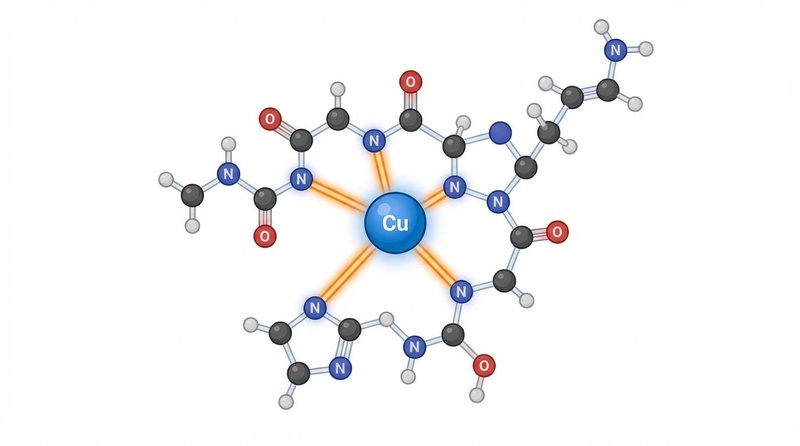
Figure 1: Molecular structure of the GHK-Cu complex. The central copper ion is stabilized by the tripeptide ligand, facilitating cellular delivery and signaling.
¶ At a Glance: The "Reset" Peptide
- What it is: A human plasma tripeptide with high affinity for copper (II).
- Primary Value: Acts as a gene modulator that reverses age-associated transcriptomic changes, stimulates collagen/elastin, and enhances DNA repair.
- Key Benefits: Reverses photodamage, improves skin thickness, promotes hair growth, and potentially offers systemic neuroprotection.
- Safety: High safety profile topically; injectable forms face stricter regulatory scrutiny (FDA Category 2 for compounding).
¶ GHK-Cu Foundations
¶ Peptide Structure and Copper Binding
GHK (Glycyl-L-histidyl-L-lysine) is a tripeptide with a high-affinity binding site for copper (II) ions (Cu2+). In its active form, GHK-Cu, the copper ion is coordinated by the nitrogen atoms of the peptide backbone and the imidazole group of the histidine residue[2:1][3]. This complex is exceptionally stable (log stability constant ~16.4), allowing it to transport copper to cells without releasing toxic free copper ions[4].
¶ Natural Occurrence and Discovery
GHK was first isolated in 1973 by Dr. Loren Pickart while investigating why young blood plasma stimulated the protein synthesis of aged liver cells better than old plasma[1:1]. He identified GHK as the factor responsible for "rejuvenating" the tissue. It is naturally present in human plasma, saliva, and urine.
¶ Age-Related Decline
In healthy young adults (age 20), GHK levels in the plasma are approximately 200 ng/mL. By age 60, these levels decline by more than 60%, dropping to roughly 80 ng/mL[5]. This decline is hypothesized to contribute to the reduced wound healing and regenerative capacity observed in elderly populations.
¶ Molecular Biology and Gene Regulation
GHK-Cu is increasingly viewed as an "epigenetic modulator" rather than a simple growth factor.
¶ Gene Expression Modulation
Using the Broad Institute’s Connectivity Map, researchers found that GHK modulates approximately 31.2% (4,192) of human genes by 50% or more[1:2][6].
- Upregulation: Promotes genes for tissue repair, DNA repair, and antioxidant defense.
- Downregulation: Suppresses genes associated with chronic inflammation and cancer progression.
¶ DNA Repair Mechanisms
GHK-Cu upregulates 47 genes involved in DNA repair and downregulates only 5[3:1].
- BRCA1 and OGG1: GHK stimulates the expression of BRCA1 (a key tumor suppressor) and the base excision repair enzyme OGG1 (8-oxoguanine DNA glycosylase), which protects against oxidative DNA damage[7][6:1].
- MUTYH: It also influences the MUTYH pathway, further reducing the risk of mutations from 8-oxoguanine lesions[6:2].
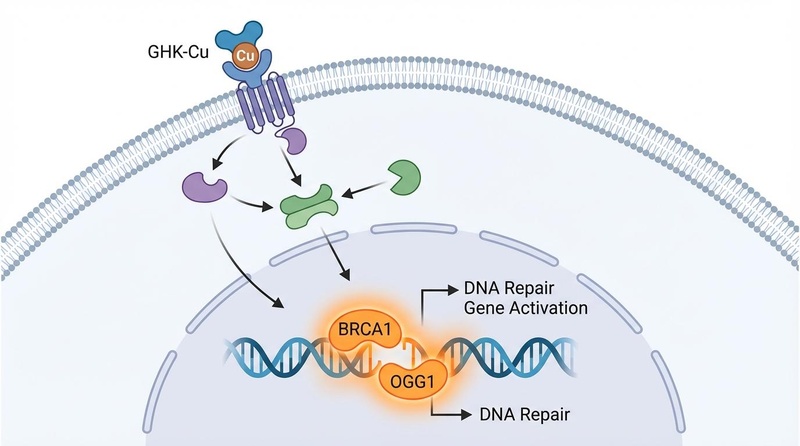
Figure 2: GHK-Cu signaling pathway leading to the activation of DNA repair genes like BRCA1 and OGG1.
¶ p16INK4a Suppression
p16INK4a is a primary biomarker of cellular senescence. GHK-Cu functions as a senomorphic by suppressing p16INK4a expression and restoring youthful markers like p63 and integrins in basal keratinocytes, effectively "rejuvenating" [[biology/cellular-senescence|senescent cell]] populations[1:3][8].
¶ Fibrinogen and Inflammation
- Fibrinogen Synthesis: GHK-Cu is a powerful inhibitor of fibrinogen synthesis, specifically suppressing the fibrinogen beta chain (FGB) gene by nearly 500%[2:2][9]. Lowering fibrinogen is associated with reduced cardiovascular risk and better wound healing.
- TGF-beta Modulation: GHK-Cu modulates the TGF-β pathway. It can reactivate impaired TGF-β signaling in diseased tissues (like COPD fibroblasts) while preventing excessive TGF-β activity that leads to fibrosis and scarring in normal skin repair[2:3][7:1]. This makes it a key tool in [[biology/epigenetic-alterations|epigenetic alterations]] management.
¶ Skin Regeneration Applications
GHK-Cu is the "gold standard" for regenerative skincare, often outperforming traditional actives in head-to-head trials.
¶ Photodamage and Wrinkle Reduction
- Resiliency: Clinical trials show that 2% GHK-Cu cream applied for 12 weeks significantly improves skin elasticity and thickness compared to placebo[10].
- Comparison: In one study, GHK-Cu increased collagen production in 70% of subjects, whereas Vitamin C achieved 50% and retinoic acid achieved 40%[1:4][11].
¶ Scar and Barrier Repair
- Scar-Free Healing: GHK-Cu facilitates "fetal-like" wound healing by modulating the balance between matrix metalloproteinases (MMPs) and their inhibitors (TIMPs). It specifically decreases MMP-9 levels in non-healing wounds to promote closure without hypertrophic scarring[2:4][12].
- Barrier Function: It enhances the production of barrier proteins (like filaggrin), reducing transepidermal water loss (TEWL).
¶ Inflammatory Skin Conditions
- Rosacea and Acne: By inhibiting NF-κB and reducing pro-inflammatory cytokines (TNF-α, IL-6), GHK-Cu calms the chronic inflammation characteristic of rosacea and cystic acne[2:5][4:1].
¶ Systemic Health Benefits
While most research is topical, GHK-Cu exhibits significant systemic potential through its gene-modulating effects.
¶ Hair Follicle Regeneration
GHK-Cu is a potent therapeutic for androgenetic alopecia and thinning hair.
- Mechanism: It stimulates the proliferation of dermal papilla cells and increases VEGF (Vascular Endothelial Growth Factor) to improve follicular blood supply[13][14].
- Efficacy: Research suggests its hair growth stimulation is comparable to Minoxidil, but without the typical side effects like scalp irritation[13:1].
¶ Cognitive Protection
Preliminary data suggests GHK-Cu modulates genes relevant to nervous system function. It upregulates anti-pain and anti-anxiety pathways and protects neurons from oxidative stress and beta-amyloid toxicity[15][16].
¶ Vascular and Immune Modulation
- Angiogenesis: GHK-Cu is a dual modulator of angiogenesis—stimulating new blood vessel growth during repair but inhibiting excessive vascularization in later stages[2:6].
- Immune Clearing: It attracts macrophages to injury sites to clear cellular debris and initiate the repair phase[1:5].
¶ Anti-Aging Mechanisms
| Mechanism | GHK-Cu Action | GRADE |
|---|---|---|
| Senescence | Suppresses p16INK4a; restores stem cell markers (senomorphic). | Moderate |
| Telomeres | Protects telomeres from oxidative damage via SOD/catalase upregulation. | Low |
| Mitochondria | Essential for Cytochrome c oxidase function (ATP production). | Moderate |
| Protein Quality | Stimulates 41 genes in the ubiquitin-proteasome system. | Moderate |
¶ Collagen Remodeling Pathway
Unlike many actives that simply "stimulate" collagen, GHK-Cu "remodels" the skin. It stimulates the breakdown of large, stiff collagen aggregates (characteristic of aged skin) and replaces them with youthful, organized Type I and Type III collagen fibers[2:7].
¶ Comparative Peptide Analysis
| Feature | GHK-Cu | Retinoids (Tretinoin) | Matrixyl 3000 | Argireline |
|---|---|---|---|---|
| Primary Goal | Regeneration/Gene Reset | Cell Turnover | Collagen Synthesis | Muscle Relaxation |
| Irritation | Low (Soothing) | High (Peeling/Redness) | Low | Low |
| Wound Healing | Accelerates | Can delay (if excessive) | Neutral | Neutral |
| Sensitivity | Ideal for sensitive skin | Often poorly tolerated | Good for most | Good for most |
Comparison with other peptides: Unlike [[peptides/bpc-157|BPC-157]], which focuses heavily on acute gastric and tendon healing, GHK-Cu is more specialized for aesthetic skin remodeling and chronic inflammation management. Compared to metabolic boosters like [[pages/nad-plus|NAD+]], GHK-Cu provides structural rather than energetic cellular support.
Synergy with Hyaluronic Acid (HA): HA acts as an ideal delivery vehicle and immediate hydrator, while GHK-Cu provides the long-term structural repair. Combining Low Molecular Weight HA with GHK-Cu enhances penetration into deeper dermal layers[17][18].
¶ Formulation Science
¶ pH Optimization for Stability
GHK-Cu is highly sensitive to pH.
- Optimal Range: pH 5.5 to 7.5.
- Instability: In environments with pH < 5.0 (like L-ascorbic acid serums), the copper ion dissociates from the peptide, turning the solution from blue to green or clear and rendering it ineffective[19][20].
¶ Concentration and Synergies
- Standard Concentration: 0.5% to 2% for daily facial use; up to 5% for scalp/hair.
- Synergistic Ingredients: Hyaluronic Acid, Niacinamide, Glycerin.
- Incompatibilities: Avoid mixing with L-Ascorbic Acid, AHAs/BHAs, and strong chelators like EDTA in the same application step[20:1][21].
¶ Safety and Contraindications
Clinical Protocol
Standard topical protocols involve once or twice daily application. For sensitive skin, starting with 0.1%–0.5% concentrations is recommended before moving to 1%+.
- Copper Toxicity: Extremely rare with topical use, as GHK-Cu is naturally occurring and tightly bound. Systemic copper levels are generally unaffected by topical application.
- Pregnancy: Use with caution; while GHK is natural, high-dose copper supplementation/application is often avoided unless supervised.
- Sensitive Skin: GHK-Cu is actually used to treat sensitive skin due to its anti-inflammatory properties, though the blue pigment can occasionally cause temporary staining on very pale skin if not formulated properly.
¶ Legal and Regulatory Status
¶ FDA Classification
- Cosmetic: Widely approved for topical use as "Copper Tripeptide-1" (INCI). It is in Category 1 for non-injectable routes[22][23].
- Drug: Not FDA-approved as a systemic drug.
- Compounding: As of late 2023, the FDA moved injectable GHK-Cu to Category 2 (Significant Safety Risks), effectively banning its compounding for injection by 503A pharmacies due to lack of longitudinal safety data for the parenteral route[24][25].
¶ Intellectual Property
The original patents held by Dr. Loren Pickart have largely expired, leading to a surge in commercial availability. However, new patents exist for specific delivery systems (like ionic liquids) and specialized crystallization methods used by high-purity manufacturers[26][27].
¶ References
Pickart L. The human tri-peptide GHK and tissue remodeling. J Biomater Sci Polym Ed. 2008;19(8):969-88. https://doi.org/10.1163/156856208784909435 ↩︎ ↩︎ ↩︎ ↩︎ ↩︎ ↩︎
Pickart L, Margolina A. Regenerative and Protective Actions of the GHK-Cu Peptide in the Light of the New Gene Data. Int J Mol Sci. 2018;19(7):1987. https://doi.org/10.3390/ijms19071987 ↩︎ ↩︎ ↩︎ ↩︎ ↩︎ ↩︎ ↩︎ ↩︎
Pickart L, Vasquez-Soltero JM, Margolina A. GHK, the Human Skin Remodeling Peptide, Induces Anti-Cancer Expression of Numerous Caspase, Growth Regulatory, and DNA Repair Genes. J Anal Oncol. 2014;3(4). https://doi.org/10.6000/1927-7229.2014.03.04.1 ↩︎ ↩︎
Lau SJ, Sarkar B. The interaction of copper(II) and glycyl-L-histidyl-L-lysine, a growth-modulating tripeptide from plasma. Biochem J. 1981;199(3):649-56. https://doi.org/10.1042/bj1990649 ↩︎ ↩︎
Pickart L, Vasquez-Soltero JM, Margolina A. GHK-Cu may prevent oxidative stress in skin by regulating copper and modifying expression of numerous antioxidant genes. Cosmetics. 2015;2(3):236-247. https://doi.org/10.3390/cosmetics2030236 ↩︎
Pickart L, Margolina A. GHK-Cu: The Peptide That Reverses Aging at the DNA Level. 2025. https://www.kristisawicki.com/post/ghk-cu-the-peptide-that-reverses-aging-at-the-dna-level ↩︎ ↩︎ ↩︎
Pickart L, Vasquez-Soltero JM, Margolina A. GHK and DNA: Resetting the Human Genome to Health. Biomed Res Int. 2014;2014:151435. https://doi.org/10.1155/2014/151435 ↩︎ ↩︎
Pickart L, et al. GHK-Cu may Prevent Oxidative Stress in Skin by Regulating Copper and Modifying Expression of Numerous Antioxidant Genes. ResearchGate. 2015. https://www.researchgate.net/publication/280531729_GHK-Cu_may_Prevent_Oxidative_Stress_in_Skin_by_Regulating_Copper_and_Modifying_Expression_of_Numerous_Antioxidant_Genes ↩︎
ResearchGate. GHK and Fibrinogen Table. 2014. https://www.researchgate.net/figure/GHK-and-fibrinogen_tbl1_266746407 ↩︎
Leyden J, et al. Skin care benefits of copper peptide containing facial cream. Am Acad Dermatol Meeting. 2002. ↩︎
Abdulghani AA, et al. Effects of topical creams containing vitamin C, a copper-binding peptide cream or vitamin E on formation of collagen. Dermatol Surg. 1998;24(4):401-9. https://doi.org/10.1111/j.1524-4725.1998.tb04206.x ↩︎
Canapp SO Jr, et al. The effect of topical tripeptide-copper complex on healing of ischemic open wounds. Vet Surg. 2003;32(6):515-23. https://doi.org/10.1053/jvet.2003.50050 ↩︎
Gelfuso GM, et al. A novel ionic liquid-based microemulsion system to improve the skin delivery of GHK-Cu peptide for alopecia treatment. Int J Pharm. 2023;647:123490. https://doi.org/10.1016/j.ijpharm.2023.123490 ↩︎ ↩︎
Pyo HK, et al. The effect of tripeptide-copper complex on human hair growth in vitro. Arch Pharm Res. 2007;30(7):834-9. https://doi.org/10.1007/BF02978833 ↩︎
Pickart L, et al. The Effect of the Human Peptide GHK on Gene Expression Relevant to Nervous System Function. Brain Sci. 2017;7(2):20. https://doi.org/10.3390/brainsci7020020 ↩︎
Pickart L, et al. The Effect of the Human Peptide GHK on Gene Expression Relevant to Nervous System Function. Brain Sci. 2017. https://pmc.ncbi.nlm.nih.gov/articles/PMC5332963/ ↩︎
Jiang L, et al. Synergy of GHK-Cu and hyaluronic acid on collagen IV upregulation. J Cosmet Dermatol. 2023. https://doi.org/10.1111/jocd.15763 ↩︎
Glimmer Goddess. Copper Peptide Serum – GHK-Cu + Argireline + Matrixyl 3000. 2024. https://glimmergoddess.com/products/organic-copper-peptide-anti-aging-serum-ghk-cu-argireline-matrixyl-3000-hyaluronic-acid-wrinkle-repair ↩︎
Mazurowska L, Mojski M. Biological activities of selected peptides: GHK-Cu. ResearchGate. 2014. https://www.researchgate.net/figure/Proposed-acidic-degradation-pathway-of-GHKCu-in-acidic-solution_fig2_268228099 ↩︎
Bioway Organic. How to Ensure the Stability & Efficacy of GHK-Cu. 2024. https://www.biowayorganicinc.com/info/how-to-ensure-the-stability-efficacy-of-ghkcu-100197138.html ↩︎ ↩︎
Active Peptide Company. GHK-Cu Presentation. 2021. https://www.activepeptide.com/wp-content/uploads/2019/11/GHK-Cu-Presentation-Active-Peptide-Company-2021.pdf ↩︎
FDA. Bulk Drug Substances Used in Compounding Under Section 503A. 2024. https://www.fda.gov/drugs/human-drug-compounding/bulk-drug-substances-used-compounding-under-section-503a-fdc-act ↩︎
FDA. 503A Bulks List Category 1. 2023. https://www.fda.gov/media/94155/download ↩︎
FDA. Safety Risks Associated with Certain Bulk Drug Substances (Category 2). 2024. https://www.fda.gov/drugs/human-drug-compounding/certain-bulk-drug-substances-use-compounding-may-present-significant-safety-risks ↩︎
Health Law Alliance. FDA Targets GLP-1 and Peptide Compounding. 2026. https://www.healthlawalliance.com/blog/fda-targets-glp-1-and-peptide-compounding-advertising-and-research-use-only-labeling ↩︎
Happi. Active Peptide Company's Patented Technology for Producing GHK-Cu. 2021. https://www.happi.com/live_from_shows/active-peptide-companys-patented-technology-for-producing-ghk-cu-copper-peptide/ ↩︎
BioSpace. Skin Biology Receives US Patent for Non-toxic Skin Cancer Therapy with Copper Peptides. 2018. https://www.biospace.com/skin-biology-receives-us-patent-for-non-toxic-skin-cancer-therapy-with-copper-peptides ↩︎