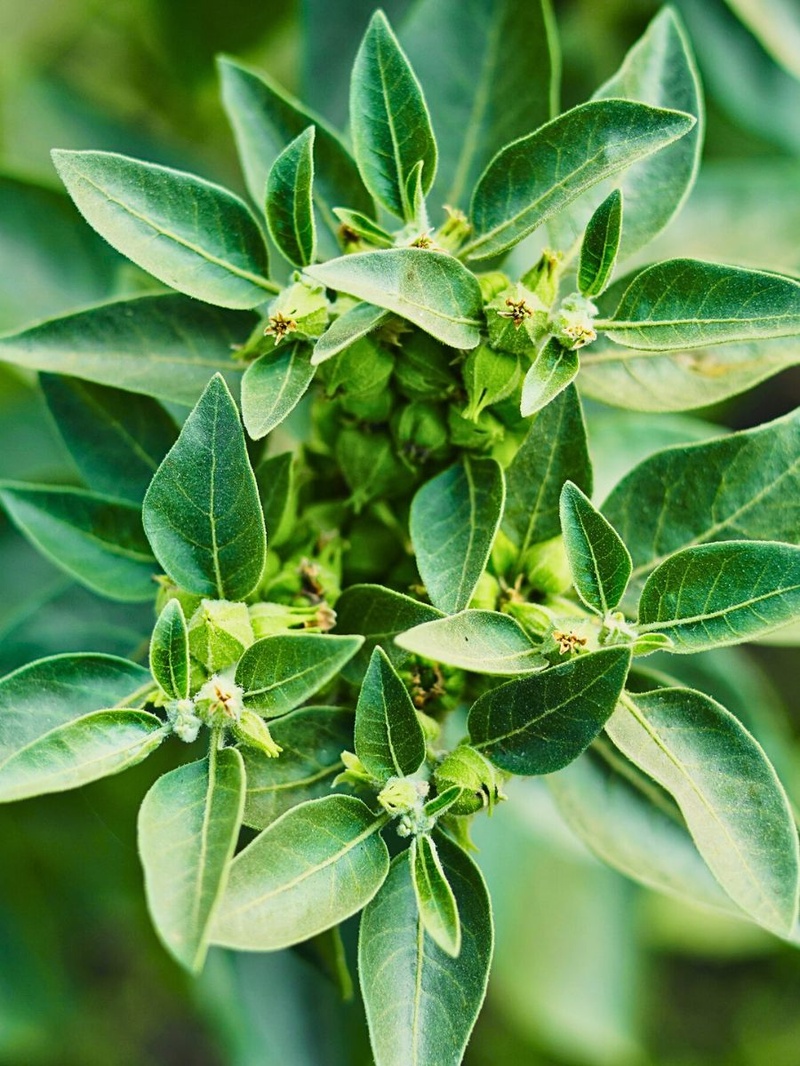
¶ Ashwagandha (Withania somnifera)
¶ At a Glance
Ashwagandha (Withania somnifera) is a foundational herb in Ayurvedic medicine, primarily recognized as an "adaptogen." In modern clinical research, it is most celebrated for its ability to lower cortisol, reduce subjective stress and anxiety, and improve sleep quality. While it is marketed heavily for testosterone enhancement and muscle building, the evidence for these applications is mixed and largely limited to specific populations.
¶ Safety Traffic Light
- 🟢 GREEN: Generally safe for most healthy adults when used at recommended dosages for up to 3-6 months.
- 🟡 YELLOW: May interact with thyroid medications (it can increase thyroid hormone levels), sedatives, and immunosuppressants. Use caution if you have an autoimmune condition.
- 🔴 RED: Do NOT use if pregnant (traditional use suggests it may act as an abortifacient) or breastfeeding due to insufficient safety data.
¶ Protocol Card
- Stress & Anxiety: 300–600 mg daily of a standardized root extract (e.g., KSM-66, Sensoril).
- Sleep Enhancement: 300–600 mg taken in the evening or divided into two doses (morning and evening).
- Administration: Best taken with meals to minimize potential gastrointestinal discomfort.
- Cycling: Many practitioners recommend cycling (e.g., 8-12 weeks on, 4 weeks off) to prevent tolerance, though long-term clinical data is limited.
¶ Bottom Line
Ashwagandha is one of the few herbal supplements with robust, high-quality human data supporting its efficacy for anxiety, chronic stress, and insomnia. Its benefits for physical performance and hormone optimization are moderate and secondary.
¶ The "Why" (Benefits)
Ashwagandha's benefits stem from its active compounds, known as withanolides. Instead of pushing the body in a single direction (like a stimulant or a pure sedative), it acts as an adaptogen, helping the body return to homeostasis during periods of physical or psychological stress.
¶ 1. Stress and Anxiety Reduction
The most robustly supported benefit of Ashwagandha is its anxiolytic (anti-anxiety) effect. Clinical trials consistently show that supplementation significantly lowers serum cortisol levels—often by 20-30%—and reduces scores on perceived stress scales [1]. It is often used as a natural alternative to synthetic anxiolytics, though it should not replace prescribed medications without medical supervision.
¶ 2. Sleep Quality and Insomnia
By dampening the body's stress response and interacting with GABA pathways, Ashwagandha improves both sleep onset (how quickly you fall asleep) and sleep architecture (sleep quality and total sleep time). It is particularly effective for individuals whose insomnia is driven by hyperarousal and chronic stress [2].
¶ 3. Hormonal and Physical Performance
Ashwagandha has gained popularity in fitness communities for its purported effects on testosterone and muscle growth. While some studies show modest increases in testosterone and muscle strength (particularly in overweight or infertile men), it is not a potent anabolic agent for healthy, well-trained young athletes [3][4]. It may, however, improve recovery by reducing exercise-induced cortisol spikes.
¶ 4. Cognitive Function
Emerging evidence suggests that Ashwagandha may support memory, executive function, and attention. This is likely mediated by its antioxidant properties and its ability to reduce stress, which otherwise impairs cognitive processing [5].
¶ Reality Check / Context
- The "KSM-66" vs "Sensoril" Debate: Most clinical trials use branded extracts. KSM-66 is a root-only extract standardized to 5% withanolides, often preferred for energy and performance. Sensoril uses both roots and leaves, standardized to 10% withanolides, and is sometimes reported to be more sedating.
- Time to Effect: Ashwagandha is not an acute treatment. While some relaxation may be felt immediately, cortisol reduction and significant anxiety relief typically require 2 to 4 weeks of consistent daily use.
- Non-Responders: Some individuals do not experience stress relief and instead report feeling "emotionally numb" or excessively fatigued after prolonged use. This phenomenon is often colloquially referred to as "Ashwagandha anhedonia," though it is not yet well-characterized in clinical literature.
¶ Mechanism of Action
¶ HPA Axis Modulation
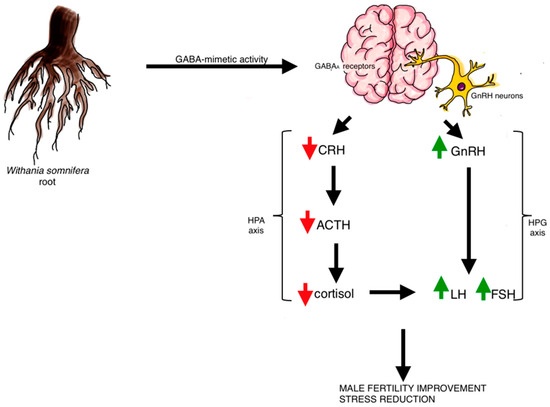
The Hypothalamic-Pituitary-Adrenal (HPA) axis is the body's central stress response system. Chronic stress leads to HPA axis overactivation and elevated cortisol. Ashwagandha suppresses the hyperactive HPA axis, directly reducing the synthesis and release of cortisol from the adrenal glands.
¶ GABAergic Activity
Withanolides mimic the action of GABA (gamma-aminobutyric acid), the primary inhibitory neurotransmitter in the brain. By binding to GABA receptors, Ashwagandha promotes a calming, sedative effect, similar to (but much milder than) benzodiazepines.
¶ Antioxidant and Anti-Inflammatory Effects
Ashwagandha reduces neuroinflammation and oxidative stress by upregulating endogenous antioxidants like superoxide dismutase (SOD) and catalase. This protects neurons from damage and contributes to its potential neuroprotective and cognitive-enhancing effects.
¶ Evidence summary table (human outcomes)
| Outcome | Evidence Quality | Effect Size | Clinical Significance | Key Source |
|---|---|---|---|---|
| Stress & Anxiety | High | Moderate to Large | Significant reduction in perceived stress scales and cortisol levels (20-30%). Best established use. | [1:1] |
| Sleep Quality | High | Moderate | Improves sleep onset latency and total sleep time, particularly in those with existing insomnia or stress-induced sleep disruption. | [2:1] |
| Testosterone (Men) | Moderate | Small to Moderate | Increases testosterone primarily in stressed, overweight, or infertile men. Minimal effect in healthy young athletes. | [3:1] |
| Muscle Strength & Recovery | Low to Moderate | Small to Moderate | Enhances resistance training adaptations and may improve VO2 max, though long-term data is lacking. | [4:1] |
| Cognitive Function | Low to Moderate | Small | Preliminary evidence for improved attention, executive function, and memory in stressed adults and mild cognitive impairment. | [5:1] |
¶ Safety & Toxicology
¶ General Side Effects
Ashwagandha is generally well-tolerated. When side effects occur, they are typically mild and gastrointestinal in nature:
- Nausea
- Upset stomach
- Diarrhea (usually only at high doses)
- Drowsiness or lethargy
¶ Specific Concerns and Contraindications
- Thyroid Function: Ashwagandha may stimulate the thyroid gland, increasing T3 and T4 levels. While this can benefit subclinical hypothyroidism, it poses a risk of hyperthyroidism for those already taking thyroid medication (e.g., levothyroxine).
- Pregnancy: Traditional Ayurvedic texts and animal studies suggest Ashwagandha may have abortifacient properties. It is strictly contraindicated during pregnancy.
- Autoimmune Conditions: Due to its potential to stimulate the immune system, individuals with autoimmune diseases (e.g., rheumatoid arthritis, lupus, Hashimoto's thyroiditis) should use it with extreme caution.
- Drug Interactions: It may amplify the effects of sedatives (benzodiazepines, barbiturates), alcohol, and drugs that lower blood pressure or blood sugar.
¶ References
Alsanie, S. A., et al. (2026). Effects of ashwagandha (Withania somnifera) on mental health in adults: A systematic review and dose-response meta-analysis of randomized controlled trials. Complementary Therapies in Medicine. https://pubmed.ncbi.nlm.nih.gov/41644067/ ↩︎ ↩︎
Fatima, K., et al. (2024). Safety and efficacy of Withania somnifera for anxiety and insomnia: Systematic review and meta-analysis. Human Psychopharmacology. https://pubmed.ncbi.nlm.nih.gov/39083548/ ↩︎ ↩︎
Lopresti, A. L., et al. (2019). A Randomized, Double-Blind, Placebo-Controlled, Crossover Study Examining the Hormonal and Vitality Effects of Ashwagandha (Withania somnifera) in Aging, Overweight Males. American Journal of Men's Health. https://pubmed.ncbi.nlm.nih.gov/30854916/ ↩︎ ↩︎
Ziegenfuss, T. N., et al. (2018). Effects of an Aqueous Extract of Withania somnifera on Strength Training Adaptations and Recovery: The STAR Trial. Nutrients. https://pubmed.ncbi.nlm.nih.gov/30463324/ ↩︎ ↩︎
Gopukumar, K., et al. (2021). Efficacy and Safety of Ashwagandha Root Extract on Cognitive Functions in Healthy, Stressed Adults: A Randomized, Double-Blind, Placebo-Controlled Study. Evidence-Based Complementary and Alternative Medicine. https://pubmed.ncbi.nlm.nih.gov/34858513/ ↩︎ ↩︎