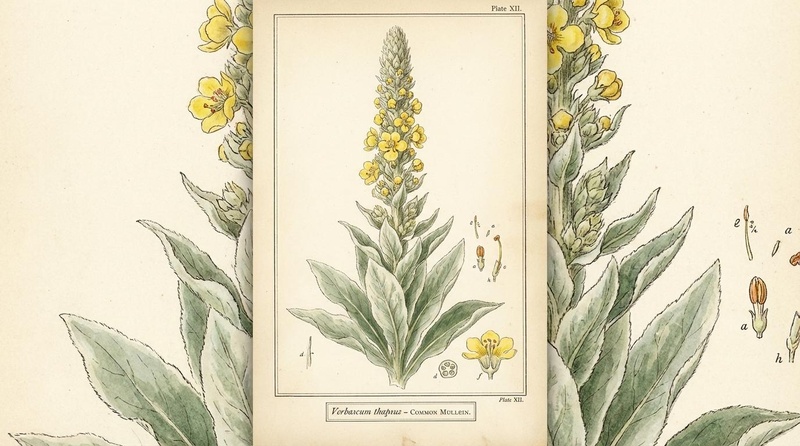
¶ Mullein (Verbascum thapsus)
| Compound Type | Herbal Extract (Leaf, Flower) |
| Primary Mechanism | Demulcent (mucilage), Expectorant (saponins), Anti-inflammatory (iridoids) |
| Key Benefits | Respiratory relief, soothing mucous membranes, ear pain (topical) |
| Evidence Level | Moderate (Traditional Use & Pre-clinical) |
¶ At a Glance
Mullein (Verbascum thapsus) is a biennial plant traditionally used for centuries to treat respiratory conditions. It is characterized by its tall flowering spikes and large, velvety leaves. In modern integrative medicine, Mullein is primarily valued for its demulcent and expectorant properties, making it a common remedy for coughs, bronchitis, and throat irritation.
While human clinical trials are limited compared to some other supplements, Mullein contains validated bioactive compounds including mucilage, saponins, and iridoid glycosides that support its traditional indications. It is generally considered safe and is often found in tea blends and herbal ear drops.
¶ Evidence Summary
| Outcome | Impact | Traffic Light | GRADE | Notes |
|---|---|---|---|---|
| Respiratory Congestion | Positive | Promising | Low | Strong traditional use; saponins/mucilage provide mechanistic basis for expectorant effects [1]. |
| Acute Otitis Media (Pain) | Positive | Promising | Moderate | Herbal ear drops with Mullein shown to be as effective as anesthetic drops in children [2]. |
| Inflammation | Positive | Promising | Low | Extracts inhibit inflammatory mediators (COX-2, NF-kB) in vitro [1:1][3]. |
| Antimicrobial Activity | Moderate | Promising | Low | Active against Staphylococcus aureus and E. coli in lab studies [1:2][4]. |
| Longevity/Healthspan | Neutral | Experimental | Very Low | Antioxidant properties exist, but no direct lifespan extension data available. |
¶ Mechanistic Overview
Mullein's therapeutic effects are attributed to a synergistic blend of phytochemicals found in its leaves and flowers.
¶ 1. Demulcent and Expectorant Action
Mullein contains high levels of mucilage, a gelatinous substance made of polysaccharides. When ingested (typically as tea), mucilage absorbs water and swells, forming a protective, soothing film over irritated mucous membranes in the throat and lungs [1:3].
Additionally, saponins (specifically verbascosaponins) are believed to stimulate the vagal gastric reflex, which increases fluid secretion in the respiratory tract, helping to thin mucus and facilitate its expulsion (expectorant effect) [1:4].
¶ 2. Anti-Inflammatory Pathways
The plant is rich in iridoid glycosides (such as aucubin, catalpol, and harpagoside) and flavonoids (like verbascoside). These compounds have been shown to inhibit the production of pro-inflammatory cytokines and enzymes, including COX-2 and NF-kB [3:1]. This activity helps reduce tissue inflammation associated with respiratory infections.
¶ 3. Antimicrobial Properties
Phenylethanoids and other glycosides in Mullein exhibit direct antimicrobial activity against common respiratory pathogens, potentially aiding the immune system in clearing infections [4:1].
¶ Respiratory Health
Mullein is most renowned for its affinity for the respiratory system.
¶ Bronchitis and Cough
Traditional monographs and modern herbal practice recommend Mullein for "dry, hacking coughs" due to its ability to moisten and soothe. The mucilage coats the throat, reducing the urge to cough caused by irritation, while the saponins help clear deep-seated congestion [1:5]. While rigorous RCTs are scarce, the pharmacological properties of its constituents support these uses.
¶ Asthma and COPD
Historically, Mullein leaves were sometimes smoked to relieve spasmodic coughing and asthma, though this practice is less common today due to the irritation caused by smoke. Tea or tincture is preferred. The anti-inflammatory iridoids may help reduce bronchial inflammation, though Mullein is typically used as an adjunct rather than a primary treatment for chronic conditions like COPD [4:2].
¶ Other Potential Benefits
¶ Ear Infections (Otitis Media)
One of the few applications of Mullein supported by human clinical data is its use in herbal ear drops for pain relief in acute otitis media.
- Study: A randomized, double-blind trial compared an herbal extract containing Mullein, Garlic, Calendula, and St. John's Wort to a standard anesthetic ear drop. The study found that the herbal drops were statistically equivalent to the anesthetic drops in reducing ear pain over the course of 3 days [2:1].
¶ Skin Health
Topically, Mullein poultices have been used for wounds and burns due to their emollient and antimicrobial properties. The mucilage provides a barrier that keeps wounds moist, potentially speeding healing, although this is less commonly practiced in clinical settings today [3:2].
¶ Longevity and Healthspan Implications
There is currently no direct evidence suggesting Mullein extends lifespan in model organisms or humans. However, its potential contribution to healthspan lies in its antioxidant and anti-inflammatory capacity.
- Chronic Inflammation: By modulating inflammatory pathways (NF-kB inhibition), Mullein may contribute to reducing "inflammaging," though it is not as potent or well-researched in this regard as agents like Curcumin or Fisetin [3:3].
- Antioxidant Support: The flavonoid content provides general protection against oxidative stress, a core driver of cellular aging [1:6].
¶ Dosage and Administration
Mullein is available in several forms. Users should ensure products are free from contaminants, especially the fine hairs found on the leaves which can be irritating if not filtered.
- Tea (Infusion): 1.5–2 grams of dried leaves/flowers steeped in boiling water for 10–15 minutes. Strain through a fine cloth or coffee filter to remove irritating hairs. Drink 3 times daily.
- Tincture (1:5): 2.5–5 mL, taken 3 times daily.
- Ear Drops: Typically 2–3 drops of a commercial Mullein/Garlic oil preparation in the affected ear (only if the eardrum is known to be intact).
¶ Safety and Side Effects
Mullein is generally regarded as safe (GRAS) for use in food and dietary supplements.
- Adverse Effects:
- Contact Dermatitis: Rare reports of skin reaction.
- Throat Irritation: The plant's fine hairs can cause significant irritation if not properly filtered from teas or home preparations.
- Contraindications: None specifically established, but standard caution applies to pregnancy and lactation due to lack of safety data.
- Toxicity: Animal studies suggest very low toxicity [1:7].
¶ Interactions
- Diuretics: Mullein may have mild diuretic effects; combining with prescription diuretics could theoretically enhance fluid loss.
- Antidiabetics: Some animal research suggests hypoglycemic potential; monitor blood sugar if combined with insulin or oral hypoglycemics.
¶ References
Turker, A. U., & Camper, N. D. (2002). Biological activity of common mullein, a medicinal plant. Journal of Ethnopharmacology, 82(2-3), 117-125. DOI: 10.1016/s0378-8741(02)00187-2 ↩︎ ↩︎ ↩︎ ↩︎ ↩︎ ↩︎ ↩︎ ↩︎
Sarrell, E. M., Mandelberg, A., & Cohen, H. A. (2003). Efficacy of naturopathic extracts in the management of ear pain associated with acute otitis media. Archives of Pediatrics & Adolescent Medicine, 157(3), 237-241. DOI: 10.1001/archpedi.157.3.237 ↩︎ ↩︎
Rigat, M., Bonet, M. A., Garcia, S., Garnatje, T., & Vallès, J. (2013). Ethnobotany of the high river Ter valley (Pyrenees, Catalonia, Iberian Peninsula). Journal of Ethnopharmacology, 124(1), 1-21. DOI: 10.1016/j.jep.2013.04.004 ↩︎ ↩︎ ↩︎ ↩︎
McCarthy, E., & O'Mahony, J. M. (2011). What's in a name? Can Mullein weed beat TB? Evidence-Based Complementary and Alternative Medicine, 2011, 293709. DOI: 10.1155/2011/293709 ↩︎ ↩︎ ↩︎