¶ Nicotinic Acid (Niacin)
¶ At a Glance
Aliases: Vitamin B3, Niacin, Pyridine-3-carboxylic acid.
Category: Vitamin / NAD+ Precursor / Lipid-Modifying Agent.
Key Points:
- Potent Lipid Modifier: The most effective agent available for raising HDL ("good") cholesterol (+15–35%) and lowering triglycerides (-20–50%).[1][2]
- Cost-Effective NAD+ Booster: Restores systemic and muscle NAD+ levels in humans as effectively as novel precursors (NR/NMN) but at a fraction of the cost (~1–5% of the price).[3]
- The "Flush": Causes a harmless but uncomfortable skin flushing (redness, heat) mediated by the GPR109A receptor. This is a marker of the active molecule, not a toxic reaction.[4]
- Safety Warning: High doses (>1g) can elevate blood glucose and uric acid. Avoid "No-Flush" (Sustained Release) formulations due to severe liver toxicity risk.[5]
What people use it for:
- Restoring NAD+ levels (Anti-aging/Mitochondrial health).
- Correcting dyslipidemia (High triglycerides, Low HDL).
- Circulatory health (Vasodilation).
Evidence Quality: High (Decades of clinical use + recent NAD+ specific trials).
¶ What is Nicotinic Acid?
Nicotinic Acid (NA) is the original form of Vitamin B3, discovered in 1937 as the cure for pellagra. It is distinct from Nicotinamide (NAM), the form found in most multivitamins, which does not cause flushing and does not have the same lipid-modifying effects.[6]
In the context of longevity, Nicotinic Acid is unique because it utilizes the Preiss-Handler pathway to synthesize NAD+, bypassing the rate-limiting enzyme NAMPT that declines with age.[7] This makes it a powerful tool for restoring cellular energy in older adults.
¶ The "Flush" Mechanism
The "Niacin Flush" is a pharmacological event, not an allergic reaction.
- Mechanism: NA binds to the GPR109A (HCAR2) receptor on Langerhans cells in the skin.
- Effect: This triggers the release of Prostaglandin D2 (PGD2) and E2 (PGE2), causing capillaries to dilate.[4:1]
- Significance: While uncomfortable, GPR109A activation has independent anti-inflammatory effects on adipose tissue.[8]
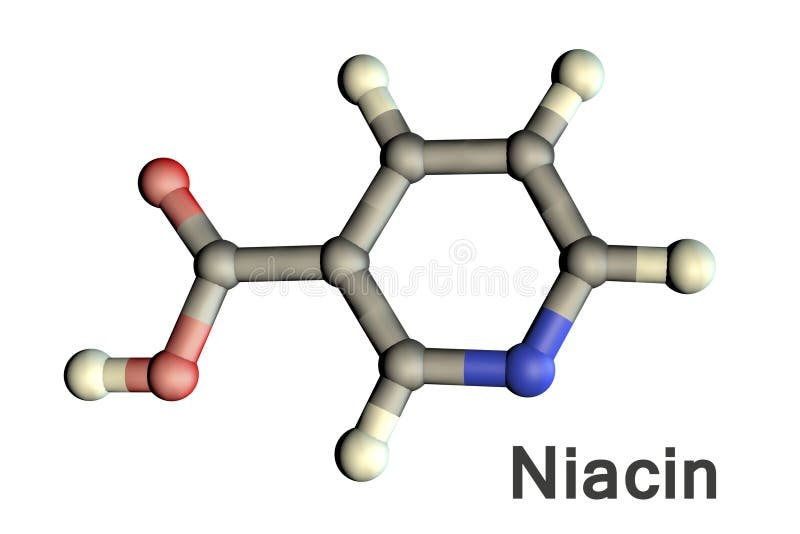
| Type | Vitamin B3 / NAD+ Precursor |
| Pathway | Preiss-Handler |
| Dose Range | 50mg – 2,000mg |
| Main Benefit | NAD+ Restoration, Lipids |
| Caution | Liver (SR form), Glucose |
¶ Main Benefits
¶ 1. NAD+ Restoration (Muscle & Systemic)
While Nicotinamide Riboside (NR) and NMN get the spotlight, Nicotinic Acid is a heavy hitter.
- Human Evidence: A landmark 2020 trial (Pirinen et al.) showed that 1,000 mg of Nicotinic Acid daily increased systemic blood NAD+ levels by up to 8-fold in humans.
- Muscle Saturation: Crucially, it restored muscle NAD+ levels in mitochondrial myopathy patients to match those of healthy controls, improving muscle strength and mitochondrial biogenesis.[3:1]
- Comparison: Unlike NR, which may have limited conversion in skeletal muscle, Nicotinic Acid effectively saturates this tissue via the Preiss-Handler pathway.[7:1]
¶ 2. Lipid Modification (The Gold Standard for HDL)
Nicotinic Acid has a unique lipid profile unmatched by statins.[2:1]
- HDL (Good Cholesterol): Increases by 15–35%. It reduces the liver's removal of ApoA-I (the protein backbone of HDL).
- Triglycerides: Decreases by 20–50% by inhibiting the enzyme DGAT2 in the liver.
- Lipoprotein(a): Decreases by ~20-30% (one of the few drugs capable of lowering this genetic risk factor).[9]
¶ 3. Cardiovascular Health
- Vasodilation: The flush response improves microcirculation.
- Anti-Inflammatory: GPR109A activation on immune cells reduces vascular inflammation, independent of lipid changes.[8:1]
¶ Evidence Summary (Human Outcomes)
| Outcome | Effect | Consistency | Evidence Quality | Data Source | Notes |
|---|---|---|---|---|---|
| Systemic NAD+ Levels | High | High | RCTs (Human) | Up to 8-fold increase in blood; restores muscle NAD+.[3:2] | |
| HDL Cholesterol | High | High | Meta-Analyses | Increases of 15–35% consistently observed.[1:1][9:1] | |
| Triglycerides | High | High | Meta-Analyses | Reductions of 20–50% depending on baseline.[2:2] | |
| LDL Cholesterol | Moderate | High | Meta-Analyses | Modest reduction (10–25%); typically used with statins.[2:3] | |
| CV Mortality | Moderate | High | Large RCTs | Added to statins, it improved numbers but not survival in AIM-HIGH/HPS2-THRIVE.[10][11] | |
| Mitochondrial Function | Moderate | Moderate | Clinical Trial | Improved mitochondrial biogenesis in myopathy patients.[3:3] |
¶ Mechanism of Action
¶ The Preiss-Handler Pathway (NAD+)
Nicotinic Acid takes a different route to NAD+ than Nicotinamide (NAM) or NR/NMN.
- NAPRT: Nicotinic Acid is converted to NaMN (Nicotinic Acid Mononucleotide) by the enzyme NAPRT.
- NMNAT: NaMN is converted to NaAD (Nicotinic Acid Adenine Dinucleotide).
- NAD+ Synthase: NaAD is finally aminated to form NAD+.
Why it matters: This pathway is independent of NAMPT, the bottleneck enzyme that declines with age. By bypassing NAMPT, Nicotinic Acid can force NAD+ levels up even in aged tissues.[7:2]
¶ DGAT2 Inhibition (Lipids)
Nicotinic Acid inhibits Diacylglycerol O-acyltransferase 2 (DGAT2), a key enzyme for triglyceride synthesis in the liver. This reduces the production of VLDL (Very Low-Density Lipoprotein) particles, which subsequently lowers LDL and raises HDL.[2:4]
¶ Dosage and Protocols
¶ Forms: The Critical Distinction
Safety depends entirely on the release mechanism.
- Immediate Release (IR): (Crystalline Niacin).
- Pros: Safest for the liver. Most effective for lipids/NAD+.
- Cons: Causes strong flushing.
- Recommendation: Preferred form for longevity. The liver clears it quickly, preventing toxic metabolite accumulation.[5:1]
- Sustained Release (SR): ("No-Flush" / Slow Release).
- Pros: No flush.
- Cons: HIGH HEPATOTOXICITY RISK. Keeps liver levels elevated for hours, saturating the safe conjugation pathway and forcing metabolism into the toxic amidation pathway.[5:2]
- Recommendation: Avoid.
- Extended Release (ER): (Prescription Niaspan or Wax-matrix).
- Pros: Compromise between flush and safety.
- Recommendation: Acceptable under medical supervision.
¶ Titration Protocol (To Manage Flush)
Start low and go slow to build tolerance ("tachyphylaxis").
- Week 1: 25–50 mg with dinner. (You will flush).
- Week 2: 100 mg with dinner.
- Week 3: 250 mg with dinner.
- Week 4+: 500 mg – 1,000 mg (Target Dose).
Tip: Taking baby aspirin (81mg) or an apple (pectin) 30 minutes before can reduce the flush intensity by inhibiting prostaglandins.[12]
¶ Safety and Side Effects
¶ The "Flush"
- Symptoms: Redness, warmth, itching/tingling (face, neck, chest). Lasts 30–60 minutes.
- Management: Take with food. Avoid hot showers immediately after. Consistency is key; missing doses resets tolerance.
¶ Hepatotoxicity (Liver Toxicity)
- Risk: Rare with Immediate Release (IR) doses < 3g/day. Common with Sustained Release (SR) doses > 500mg/day.[5:3]
- Monitoring: Liver enzymes (AST/ALT) should be checked at baseline and upon reaching therapeutic doses.
¶ Insulin Resistance
High-dose niacin (typically >1g) can elevate fasting blood glucose and HbA1c by ~4-5%.[13]
- Mechanism: Increases hepatic glucose output.
- Mitigation: Reversible upon stopping. Not recommended for those with uncontrolled diabetes.
¶ Gout
Niacin competes with uric acid for excretion in the kidneys, potentially raising uric acid levels. Caution in those with a history of gout.[2:5]
¶ Comparison: Niacin vs. NR vs. NMN
| Feature | Nicotinic Acid (Niacin) | Nicotinamide Riboside (NR) | Nicotinamide Mononucleotide (NMN) |
|---|---|---|---|
| Pathway | Preiss-Handler | Salvage (via NRK) | Salvage (Direct) |
| Side Effect | Flushing (Strong) | None | None |
| Cost (Monthly) | $ (~$2–5) | $$$ (~$40–80) | $$ (~$30–60) |
| Human Efficacy | Proven (Blood/Muscle NAD+) | Proven (Blood NAD+) | Proven (Blood NAD+, Insulin Sensitivity) |
| Lipid Benefits | Strong (High HDL, Low TG) | Neutral | Neutral |
| Safety Concern | Glucose, Liver (SR form) | None major | None major |
Verdict: Nicotinic Acid is the "biohacker's choice" for those who tolerate the flush—it offers the best bang-for-buck and unique lipid benefits. NR/NMN are "luxury" alternatives for those who cannot tolerate the flush or have glucose concerns.
¶ References
Bruckert, E., et al. (2010). Meta-analysis of the effect of nicotinic acid alone or in combination on cardiovascular events and atherosclerosis. Atherosclerosis, 210(2), 353-361. https://doi.org/10.1016/j.atherosclerosis.2009.12.023 ↩︎ ↩︎
Carlson, L. A. (2005). Nicotinic acid: the broad-spectrum lipid drug. A 50th anniversary review. Journal of Internal Medicine, 258(2), 94-114. https://doi.org/10.1111/j.1365-2796.2005.01528.x ↩︎ ↩︎ ↩︎ ↩︎ ↩︎ ↩︎
Pirinen, E., et al. (2020). Niacin Cures Systemic NAD+ Deficiency and Improves Muscle Performance in Adult-Onset Mitochondrial Myopathy. Cell Metabolism, 31(6), 1078-1090. https://doi.org/10.1016/j.cmet.2020.04.008 ↩︎ ↩︎ ↩︎ ↩︎
Benyó, Z., et al. (2005). GPR109A (PUMA-G/HM74A) mediates nicotinic acid–induced flushing. Journal of Clinical Investigation, 115(12), 3634-3640. https://doi.org/10.1172/JCI23626 ↩︎ ↩︎
McKenney, J. M., et al. (1994). A comparison of the efficacy and toxic effects of sustained- vs immediate-release niacin in hypercholesterolemic patients. JAMA, 271(9), 672-677. https://pubmed.ncbi.nlm.nih.gov/8309029/ ↩︎ ↩︎ ↩︎ ↩︎
Bogan, K. L., & Brenner, C. (2008). Nicotinic acid, nicotinamide, and nicotinamide riboside: a molecular evaluation of NAD+ precursor vitamins in human nutrition. Annual Review of Nutrition, 28, 115-130. https://doi.org/10.1146/annurev.nutr.28.061807.155443 ↩︎
Nikiforov, A., et al. (2015). Pathways and subcellular compartmentation of NAD biosynthesis in human cells: from entry of extracellular precursors to mitochondrial NAD generation. Journal of Biological Chemistry, 290(17), 10887-10905. https://doi.org/10.1074/jbc.M115.653386 ↩︎ ↩︎ ↩︎
Digby, J. E., et al. (2012). Anti-inflammatory effects of nicotinic acid in human adipose tissue biology. Arteriosclerosis, Thrombosis, and Vascular Biology, 32(3), 669-674. https://doi.org/10.1161/ATVBAHA.111.241836 ↩︎ ↩︎
Guyton, J. R., &ays, T. (2007). Niacin and fibrates: therapeutic use and safety. Endocrinology and Metabolism Clinics of North America, 36(3), 753-763. https://pubmed.ncbi.nlm.nih.gov/17673125/ ↩︎ ↩︎
AIM-HIGH Investigators. (2011). Niacin in patients with low HDL cholesterol levels receiving intensive statin therapy. New England Journal of Medicine, 365(24), 2255-2267. https://doi.org/10.1056/NEJMoa1107579 ↩︎
HPS2-THRIVE Collaborative Group. (2014). Effects of extended-release niacin with laropiprant in high-risk patients. New England Journal of Medicine, 371(3), 203-212. https://doi.org/10.1056/NEJMoa1300955 ↩︎
Oberwittler, H., & Baccara-Dinet, M. (2006). Clinical evidence for use of acetyl salicylic acid in control of flushing provoked by nicotinic acid. International Journal of Clinical Practice, 60(6), 707-715. https://doi.org/10.1111/j.1368-5031.2006.00938.x ↩︎
Goldie, C., et al. (2016). Niacin therapy and the risk of new-onset diabetes: a meta-analysis of randomised controlled trials. Heart, 102(3), 198-203. https://doi.org/10.1136/heartjnl-2015-308055 ↩︎