¶ Slippery Elm (Ulmus rubra)
Slippery Elm (Ulmus rubra, synonymous with Ulmus fulva) is a deciduous tree native to eastern North America. Its inner bark has been a staple of Native American medicine for centuries and remains a primary therapeutic agent in modern herbal practice for soothing irritated mucous membranes.
- Evidence: Strong historical use and mechanistic data; small human trials support efficacy in IBS-C and sore throat; in vitro evidence for antioxidant activity in IBD.
- Safety: High safety profile (GRAS); main risk is inhibiting absorption of other oral medications.
- Action: Proceed with knowledge. Excellent for symptom management of GI and respiratory irritation.
¶ Mechanism of Action
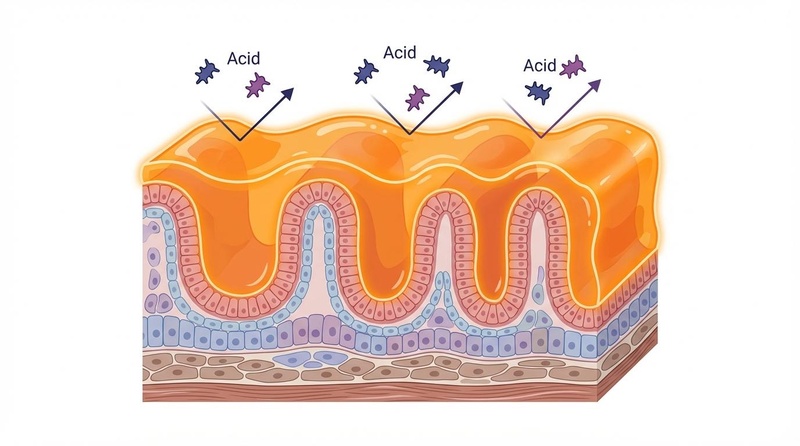
The therapeutic efficacy of Slippery Elm is derived almost exclusively from the mucilage contained within its inner bark.
¶ Hydrocolloid Formation and Demulcent Effect
The inner bark is rich in water-soluble polysaccharides (hexoses, pentoses, and polyuronides). When mixed with water, these polysaccharides swell to form a viscous hydrocolloid (gel). This gel acts as a demulcent (soothing agent) by:
- Physical Coating: Adhering to the mucous membranes of the esophagus, stomach, and intestines, creating a temporary protective barrier against acid and irritants[1].
- Moisture Retention: The hydrophilic nature of the mucilage hydrates tissue, reducing mechanical friction and irritation.
¶ Reflex Stimulation (Vagus Nerve)
Interestingly, Slippery Elm appears to soothe respiratory tissues even when not in direct contact with them (e.g., the lungs). This is attributed to a reflex mechanism:
- Ingestion of mucilage stimulates sensory nerve endings (mechanoreceptors) in the pharynx and esophagus.
- Signals travel via afferent fibers of the vagus nerve to the brainstem.
- The brainstem triggers an efferent response, stimulating submucosal glands in the bronchial tree to increase secretion of thin, watery mucus, thereby lubricating the respiratory tract and suppressing dry coughs[2].
¶ Antioxidant Activity
In vitro studies using colorectal biopsies from patients with active Ulcerative Colitis have shown that Slippery Elm extract possesses dose-dependent antioxidant activity. It effectively scavenges peroxyl and superoxide radicals, potentially reducing oxidative damage in inflamed tissues[3].
¶ Clinical Applications
¶ Irritable Bowel Syndrome (IBS)
Slippery Elm is frequently utilized to normalize bowel function in IBS, particularly the constipation-predominant subtype (IBS-C).
- Evidence: A 2010 pilot study involving 31 patients compared two herbal formulas. The formula containing Slippery Elm (along with lactulose, oat bran, and licorice) resulted in a 20% increase in bowel movement frequency () in constipation-predominant subjects. Patients also reported significant improvements in straining, abdominal pain, and bloating[4].
- Mechanism: The mucilage acts as a bulk-forming laxative and prebiotic, softening stool and soothing the intestinal lining.
¶ Inflammatory Bowel Disease (IBD)
While not a cure, Slippery Elm is used adjunctively in Crohn's Disease and Ulcerative Colitis (UC).
- Evidence Status: There are no large randomized controlled trials confirming remission induction. However, the in vitro antioxidant effects suggest it may help mitigate the oxidative stress associated with acute flares[3:1].
- Clinical Use: It is often used to soothe the GI tract during flares and improve nutritional status, as the bark is highly nutritious and easily digestible.
¶ Gastroesophageal Reflux Disease (GERD)
Herbalists commonly prescribe Slippery Elm for acid reflux and heartburn.
- "Raft" Formation: Similar to pharmaceutical alginates, the thick mucilage is hypothesized to form a floating "raft" on top of stomach contents, physically suppressing acid reflux into the esophagus.
- Esophageal Protection: The demulcent coating protects the esophageal epithelium from acid erosion, potentially reducing pain associated with erosive esophagitis[5].
¶ Sore Throat and Cough
Slippery Elm is a classic remedy for pharyngitis and laryngitis.
- Direct Effect: Lozenges or teas directly coat the throat, reducing pain and irritation from swallowing.
- Respiratory Effect: Through the vagal reflex described above, it helps lubricate the lungs and suppress non-productive, dry coughs[2:1].
¶ Longevity and Prevention
While direct longevity studies on Ulmus rubra are lacking, its effects on the gut-barrier integrity are relevant to healthy aging.
- Gut Barrier Support: By coating the intestinal lining, Slippery Elm may help ameliorate "leaky gut" (intestinal permeability), a condition linked to systemic inflammation and autoimmunity.
- Microbiome Modulation: The polysaccharides in Slippery Elm serve as prebiotics. Colonic bacteria ferment these fibers to produce Short-Chain Fatty Acids (SCFAs) like butyrate. Butyrate is critical for colonocyte health, immune regulation, and maintaining the gut barrier, all of which are protective against "inflammaging" (age-related chronic inflammation)[6].
¶ Safety and Dosing
¶ Safety Profile
Slippery Elm is generally recognized as safe (GRAS) for the general population. No serious adverse events were reported in the IBS pilot study[4:1].
¶ Contraindications and Warnings
- Drug Absorption: The mucilage coating can inhibit or delay the absorption of other oral medications.
- Guideline: Take Slippery Elm at least 2 hours before or after other medications[7].
- Pregnancy: Traditionally, whole bark preparations were sometimes associated with abortifacient effects. Due to a lack of safety data and historical caution, use is contraindicated during pregnancy[7:1].
- Allergies: Individuals with allergy to elm pollen should avoid this supplement.
¶ Standard Dosage
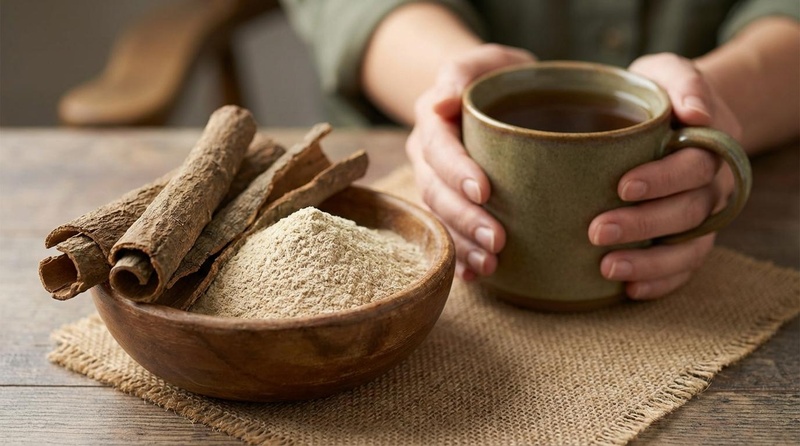
- Powder (Tea/Gruel): 1–2 teaspoons (approx. 4–5g) mixed with water or hot water, 3 times daily.
- Capsules: 400–500 mg per capsule, 3–4 times daily. Note: Capsules may be less effective for upper GI issues (throat/esophagus) as they bypass the area before releasing mucilage.
- Lozenges: Used as needed for sore throat.
¶ Traditional Uses
Native American tribes, including the Cherokee, Ojibwe, and Lakota, utilized Slippery Elm extensively:
- Nutritive Gruel: Boiled with water or milk to feed infants, the elderly, and those recovering from wasting diseases (like typhoid) due to its digestibility and nutrient content.
- Poultice: Applied topically to draw out toxins from boils, soothe burns, and heal gunshot wounds.
- Midwifery: Used as a lubricant during labor[8].
¶ References
Watts CR, Rousseau B. Slippery Elm, its Biochemistry, and use as a Complementary and Alternative Treatment for Laryngeal Irritation. J Investig Biochem. 2012;1(1):17-23. ↩︎
Langmead L, Dawson C, Hawkins C, Banna N, Loo S, Rampton DS. Antioxidant effects of herbal therapies used by patients with inflammatory bowel disease: an in vitro study. Aliment Pharmacol Ther. 2002;16(2):197-205. ↩︎ ↩︎
Hawrelak JA, Myers SP. Effects of two natural medicine formulations on irritable bowel syndrome symptoms: a pilot study. J Altern Complement Med. 2010;16(10):1065-1071. ↩︎ ↩︎
Alternative Medicine Review. Glycyrrhiza glabra. Altern Med Rev. 2005;10(3):230-237. [Mechanism extrapolation for demulcents in GERD]. ↩︎
Peterson CT, et al. Prebiotic Potential of Herbal Medicines Used in Digestive Health and Disease. J Altern Complement Med. 2018;24(7):656-665. ↩︎
Natural Medicines Comprehensive Database. Slippery Elm. Therapeutic Research Faculty; 2024. ↩︎ ↩︎
Moerman DE. Native American Ethnobotany. Timber Press; 1998. ↩︎