¶ Pinealon: Benefits, Dosage, & Side Effects
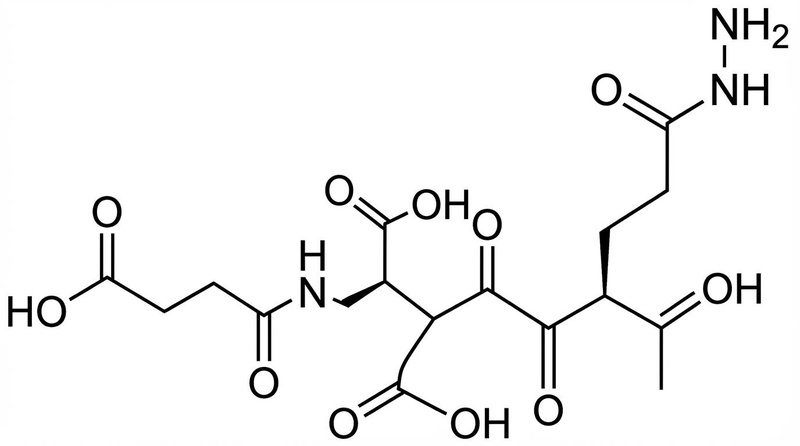
| Sequence | Glu-Asp-Arg (EDR) |
| Formula | C15H26N6O8 |
| Molar Mass | 418.40 g/mol |
| Category | Synthetic Bioregulator (Cytogen) |
| Source | Synthetic (derived from Cortexin) |
| Admin | Oral, SubQ, Intranasal |
| Origin | Russia (Khavinson) |
Pinealon is a synthetic tripeptide (Glu-Asp-Arg) designed to restore optimal function to the brain and central nervous system. As a Khavinson Bioregulator, it operates on an epigenetic level, penetrating the cell nucleus to bind directly to DNA and normalize the expression of genes related to serotonin synthesis (TPH1) and antioxidant defense (SOD2, GPX1). Clinical data from Russia indicates significant efficacy in treating traumatic brain injury (TBI), organic brain syndrome, and age-related cognitive decline, offering a targeted, non-sedative approach to neuroprotection.
¶ At a glance
Aliases
- Also known as: EDR, Synthetic Cortexin Cytogen
- Amino acid sequence: Glu-Asp-Arg (L-Glutamic acid, L-Aspartic acid, L-Arginine)
- Sequence length: Tripeptide (3 amino acids)
- Category: Synthetic Peptide Bioregulator (Cytogen), Nootropic, Geroprotector
Key points
- Primary Benefit: Significantly improves memory, attention, and cognitive function in patients with traumatic brain injury and organic brain disorders.
- Mechanism: Acts as a "gene switch," penetrating the blood-brain barrier and nucleus to upregulate serotonin production and endogenous antioxidant enzymes.
- Safety: Extremely high safety profile with no reported toxicity or drug interactions in clinical trials; naturally occurring amino acids.
- Key Distinction: Unlike traditional antidepressants or stimulants, it regulates the brain's capacity to produce neurotransmitters rather than artificially forcing their release.
What people use it for
- Main goals: Recovery from TBI/concussion, preventing age-related cognitive decline, improving focus and mental stamina, correcting circadian rhythms/sleep, and managing stress.
- Evidence quality: Moderate (Strong Russian clinical data and mechanistic evidence; limited Western RCTs).
¶ Legal & regulatory status
⚠️ CRITICAL INFORMATION
Regulatory classification
- FDA status: Unapproved. Pinealon is not an FDA-approved drug in the United States. It is available as a dietary supplement or research chemical.
- Russia/CIS: Registered and approved as a therapeutic bioregulator/supplement. It is widely used in clinical practice for neurology and gerontology.
- Prescription requirement: In Russia, it is often available over-the-counter or prescribed. In the US/EU, it is sold as a supplement or research compound without a prescription.
Sports and competition
- WADA status: Not explicitly listed on the WADA Prohibited List, but "peptide hormones and growth factors" are a controlled category. Athletes should exercise extreme caution as synthetic peptides can be interpreted under catch-all clauses.
Source quality considerations
- Authenticity: Genuine Khavinson peptides are often sourced from authorized Russian manufacturers (e.g., Peptides, Nanopep).
- Research Chemicals: Gray-market lyophilized powders vary significantly in purity. Third-party testing (HPLC/MS) is essential to verify sequence identity and absence of heavy metals/endotoxins.
¶ What is Pinealon?
Pinealon is a Synthetic Cytogen, a short-chain peptide created to mimic the active site of a complex biological extract.
- Origin Story: Scientists at the St. Petersburg Institute of Bioregulation and Gerontology analyzed Cortexin (injectable) and Cerluten (oral), potent polypeptide extracts from the cerebral cortex of cattle. They identified the specific tripeptide sequence (Glu-Asp-Arg) responsible for much of its neuroprotective activity.
- Synthesis: Pinealon is the synthesized version of this active site. Being a single, pure molecule, it is more stable than animal extracts and carries zero risk of prion disease or immune rejection.
- The "Smart" Peptide: It belongs to a class of compounds called Bioregulators. Unlike drugs that force a pathway (e.g., an SSRI blocking serotonin reuptake), Pinealon restores the "norm" of protein synthesis. If a tissue is functioning normally, the peptide typically has little effect; if the tissue is stressed or damaged, the peptide upregulates repair processes.
¶ What are Pinealon's main benefits?
¶ Traumatic Brain Injury (TBI) & Recovery
Russian clinical studies have demonstrated Pinealon's potent ability to accelerate recovery from craniocerebral trauma.
- Outcomes: In a study of TBI patients, adding Pinealon to standard therapy resulted in a 59.4% improvement in memory and attention compared to controls.
- Symptoms: Patients reported reduced headache intensity, decreased dizziness, and improved emotional stability.
- Evidence Quality: Moderate (Clinical trials in Russia; not replicated in large-scale Western RCTs).
¶ Cognitive Preservation & Anti-Aging
Pinealon is widely used as a geroprotector to slow brain aging.
- Effect: A study on elderly patients with organic brain syndrome showed that Pinealon improved psychomotor reaction speeds and mental performance, effectively "reducing the biological age" of the central nervous system.
- Mechanism: It prevents the loss of dendritic spines (synaptic connections) often seen in Alzheimer's and aging models.
¶ Mood & Circadian Rhythm Regulation
By targeting the TPH1 gene, Pinealon naturally supports serotonin production.
- Benefit: Improved mood stability and stress resilience without the blunting effects of sedatives.
- Sleep: Users often report deeper, more restorative sleep and normalized sleep-wake cycles, likely due to serotonin being the precursor to melatonin.
¶ Vision & Retinal Health
While Visoluten is the primary eye bioregulator, Pinealon is often used adjunctively for optic nerve health.
- Application: Supports the neural components of the visual system, potentially aiding in conditions involving optic neuropathy or retinal degeneration.
¶ Evidence summary table (human outcomes)
| Outcome / Goal | Effect | Consistency | Evidence quality | Trials/Data | Notes |
|---|---|---|---|---|---|
| Memory & Attention (TBI) | High | Moderate | Russian RCTs | Significant improvement in 59.4% of TBI patients vs control. | |
| Cognitive Decline (Aging) | High | Moderate | Russian Clinical | Reduced rate of biological aging in CNS; improved psychomotor speed. | |
| Stress Resilience | Moderate | Low | Preclinical/Obs | Reduced anxiety/depression markers; improved behavioral response to stress. | |
| Sleep Quality | Moderate | Anecdotal/Mech | User Reports | Mechanism (TPH1 upregulation) supports circadian regulation claims. |
¶ How does Pinealon work?
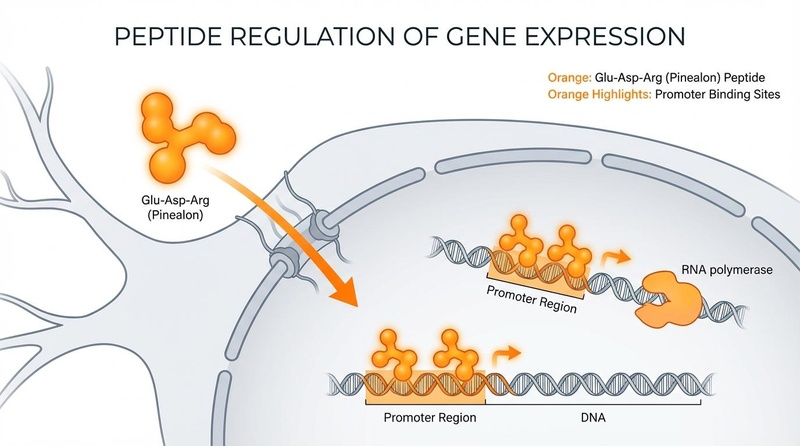
Pinealon works through Short Peptide Regulation of Gene Expression, a mechanism pioneered by Professor Khavinson. It does not act on cell surface receptors but penetrates deep into the nucleus.
¶ Epigenetic Regulation
- Direct DNA Binding: Pinealon enters the nucleus and binds specifically to the promoter regions of target genes.
- Unwinding Chromatin: This binding interacts with histone proteins, inducing a conformational change in the chromatin (the DNA-protein complex). This "unwinds" the DNA, making specific genes accessible to RNA polymerase.
- Transcription: The result is the initiation of protein synthesis for genes that may have been silenced by age or stress.
¶ Specific Gene Targets
- TPH1 (Tryptophan Hydroxylase): The rate-limiting enzyme for serotonin synthesis. By upregulating TPH1, Pinealon increases the brain's capacity to produce serotonin, influencing mood, cognition, and sleep.
- SOD2 & GPX1 (Antioxidant Enzymes): Upregulates Superoxide Dismutase and Glutathione Peroxidase. This enhances the neuron's internal defense system against oxidative stress and free radicals.
- Caspase-3 (Downregulation): Inhibits the expression of CASP3, a gene that drives apoptosis (programmed cell death), thereby protecting neurons from dying after injury or hypoxia.
- Irisin (FNDC5): Stimulates expression of irisin, a "exercise hormone" linked to neurogenesis and metabolic health.
¶ Pharmacokinetics
- Bioavailability: Being a tripeptide (3 amino acids), Pinealon is small enough to be absorbed intact through the GI tract (oral) or nasal mucosa.
- Blood-Brain Barrier: Readily crosses the BBB to reach neuronal tissues.
- Safety: Rapidly metabolized into its constituent amino acids (Glutamate, Aspartate, Arginine) with no toxic metabolites.
¶ Administration, reconstitution, and storage
¶ Routes of administration
- Oral (Capsules): The standard medical route in Russia. Bioregulators are uniquely stable and effective orally due to their small size and specific transport mechanisms.
- Sublingual/Intranasal: Sprays or drops. Offers rapid absorption and direct nose-to-brain transport potential.
- Subcutaneous Injection (SubQ): Preferred by biohackers for maximum bioavailability and cost-effectiveness (requiring lower doses).
¶ Reconstitution (for lyophilized powder)
If using injectable research peptides:
- Diluent: Bacteriostatic water.
- Volume: Standard is 1 mL or 2 mL of water per vial.
- Handling: Do not shake; swirl gently.
- Storage: Reconstituted solution must be refrigerated (2–8°C) and used within ~14 days.
Example reconstitution math (10 mg vial):
| Concentration Goal | Water Added | Resulting Strength | Dose Volume (1 mg) |
|---|---|---|---|
| Standard | 2 mL | 5 mg/mL | 0.2 mL (20 units) |
| Concentrated | 1 mL | 10 mg/mL | 0.1 mL (10 units) |
¶ Dosage and protocols
1. The "Khavinson" Oral Protocol (Clinical)
Designed for general restoration and anti-aging.
- Dose: 1–2 capsules (containing 100 mcg active peptide each) taken 1–2 times daily.
- Timing: 15–20 minutes before meals.
- Duration: 10–30 days.
- Frequency: Repeat course every 4–6 months.
2. Intensive/Therapeutic Protocol (TBI or Acute Stress)
Used for active recovery from injury.
- Dose: 2–4 capsules daily.
- Duration: 30 days.
- Combination: Often combined with Vesugen (vascular) and other standard therapies.
3. Injectable "Biohacker" Protocol
Derived from user experience and extrapolation.
- Dose: 100 mcg – 1 mg (standard) up to 3 mg (high/loading) per day.
- Frequency: Daily injection (SubQ).
- Cycle: 10 days on / rest, or 20 days on / rest.
- Note: Many users find that 100 mcg – 300 mcg daily is sufficient due to the high potency of direct injection.
¶ Safety and side effects
Pinealon has an exceptional safety profile.
- Toxicity: In over 15 million administrations of Khavinson peptides (collectively) over decades, no serious adverse events have been reported.
- Side Effects: Very rare. Potential for mild transient excitement or headache in sensitive individuals due to increased serotonergic activity.
- Contraindications: None formally identified. Standard caution applies to pregnancy and breastfeeding due to lack of specific data.
- Oncogenic Risk: Bioregulators are generally considered to reduce cancer risk by normalizing cell differentiation, rather than promoting uncontrolled growth like some growth factors.
¶ Drug and supplement interactions
- Serotonergic Agents (SSRIs/MAOIs): Theoretically, since Pinealon upregulates serotonin synthesis, combining it with high-dose antidepressants could potentiate effects. However, Pinealon regulates synthesis capacity rather than forcing release, reducing the risk of Serotonin Syndrome compared to direct precursors like 5-HTP. Monitoring is still advised.
- No other known interactions: Can generally be taken with other supplements, vitamins, and medications.
¶ Stacks and Combinations
Bioregulators are frequently stacked to target multiple systems simultaneously.
1. The "Brain Repair" Stack (TBI/Stroke)
- Pinealon (Neural tissue)
- Vesugen (Vascular/Blood vessels): Improves blood flow to the brain.
- Cortexin (if available): For acute, intensive neurotrophic support.
2. The "Student/Executive" Stack (Cognition)
- Pinealon: Focus and processing speed.
- Semax: Acute attention and BDNF increase.
- Caffeine + L-Theanine: Baseline energy.
3. The "Anti-Aging" Stack
- Pinealon: Brain aging.
- Epitalon: Telomere health and endocrine normalization.
- Vesugen: Vascular health.
¶ Cost considerations
- Oral Capsules: Authentic Russian brands (e.g., Nature's Bioherbs, Peptides) typically cost $40–$70 for a course (20–60 capsules).
- Lyophilized Powder: Research chemical sources range from $20–$50 for a 10mg vial. Since typical doses are small (100mcg - 1mg), a single vial can last a long time, making injection highly cost-effective (potentially <$1/day).
¶ FAQ
1. Is Pinealon a stimulant?
No. It does not force the release of catecholamines like amphetamines or caffeine. It normalizes cell function. Users typically report "clean" clarity and improved stamina rather than a jittery "high."
2. Can I take it with antidepressants?
Many users do, as it works upstream on gene expression rather than at the receptor level. However, because it enhances serotonin synthesis, you should monitor how you feel and consult your provider, as you might eventually need to adjust your medication dosage.
3. How quickly does it work?
Injectable forms may show effects (clarity, visual sharpness) within days. Oral courses are cumulative, with peak benefits often felt after 10–20 days of consistent use.
4. Is it better than Cerebrolysin?
They are different. Cerebrolysin is a complex "soup" of neurotrophic factors excellent for acute stroke and dementia. Pinealon is a specific genetic switch. Pinealon is safer for casual use, has no risk of allergic reaction (unlike the porcine-derived Cerebrolysin), and is orally active.